A packaging mechanism that rewards curiosity beyond the intended customer experience.
An Unexpected Introduction
Sometimes the most interesting engineering discoveries arrive when you’re not looking for them.
I recently opened a business bank account with Mettle, part of NatWest, principally to take advantage of its integration with FreeAgent for my business accounting.
The account was approved, and a few days later, my new bank card arrived in the post.
Nothing particularly unusual about that.
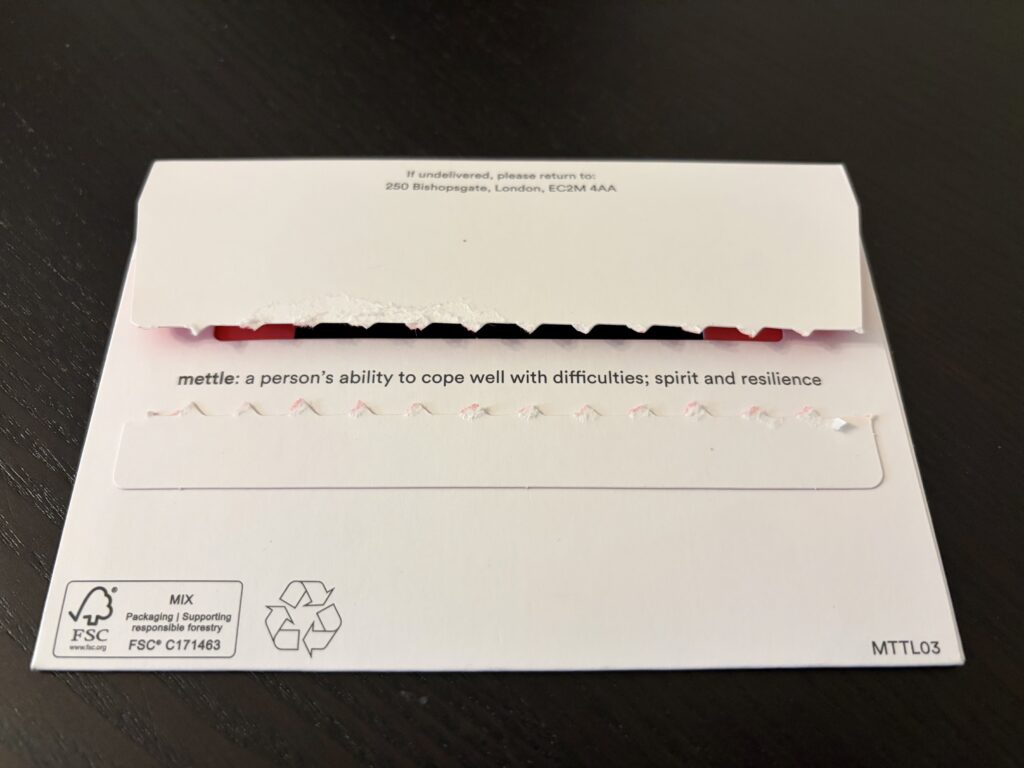
The envelope itself felt substantial. Good-quality card, a reassuring thickness, and a neatly integrated perforated tear strip. Already a more considered presentation than the ordinary envelope-and-letter arrangement I might have expected.
I removed the tear strip and lifted the flap.
And something unexpected happened.
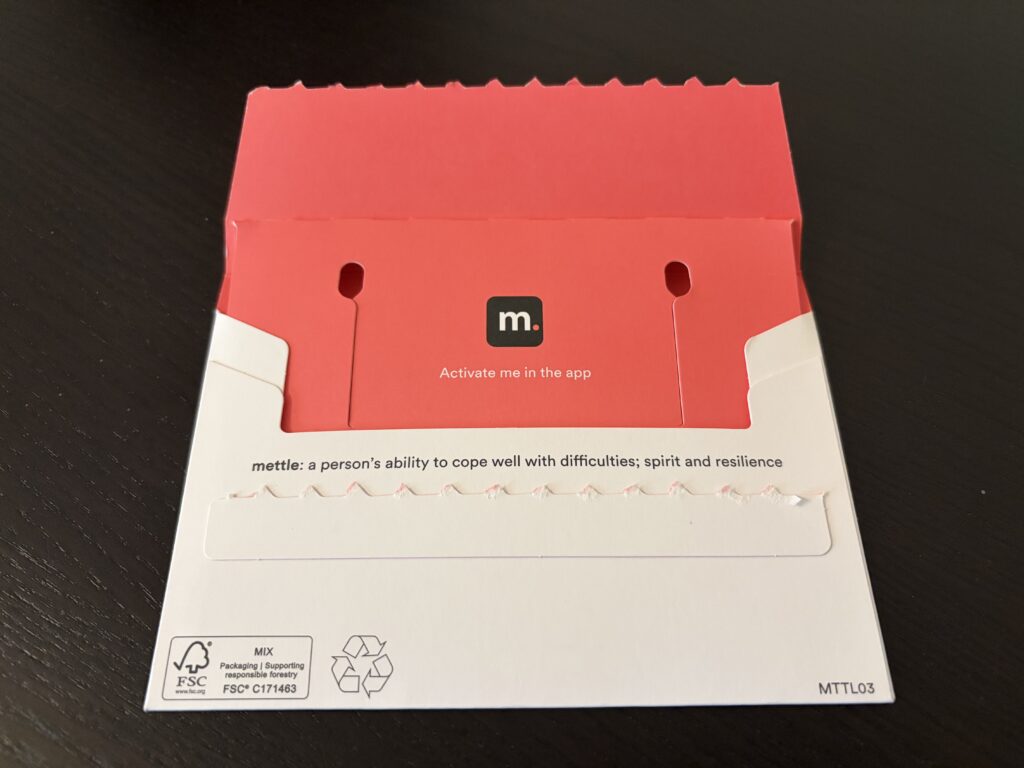
The bank card rose to meet me.
Rather than simply opening to reveal a card attached to a piece of paper, the movement of the envelope’s flap caused the card carrier to elevate from within the packaging.
It was a small moment, but an effective one.
My first reaction was simply, that’s clever.
More Than an Envelope
What made the experience interesting wasn’t simply that the card moved. It was that the movement felt completely natural.
One action performed two functions.
Lifting the flap opened the packaging and simultaneously presented the product.
No separate instruction. No additional step. No obvious mechanism demanding attention.
The movement itself became part of the introduction.
Beneath the card, another considered detail appeared: Mettle’s definition of its own name.
Mettle: a person’s ability to cope well with difficulties; spirit and resilience.
A small piece of brand storytelling, positioned exactly where the recipient would encounter it during the reveal.
The black card, vibrant red interior, restrained typography and carefully timed movement worked together to turn an otherwise routine delivery into something memorable.
There was also a practical instruction printed on the carrier: Activate me in the app.
The packaging was doing several jobs at once. Protecting and delivering the card, introducing the brand, presenting the product and directing the customer’s next action.
All through a remarkably simple interaction.
The Engineering Behind the Reveal
Having appreciated the opening experience, I became interested in something else.
How did it actually work?
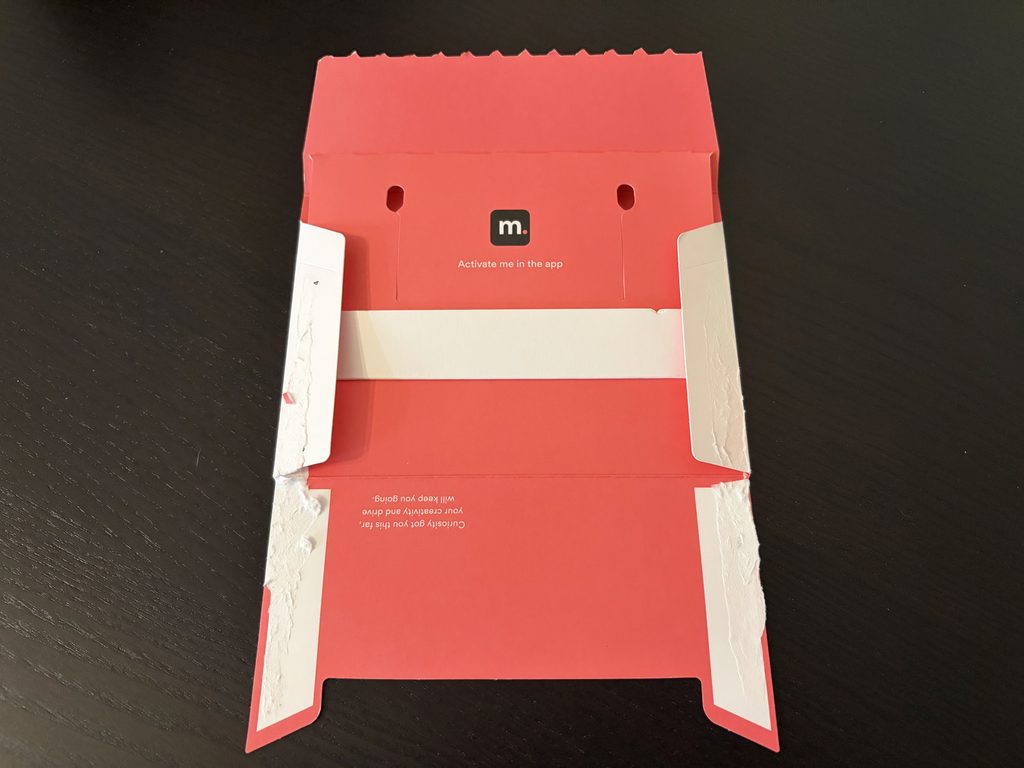
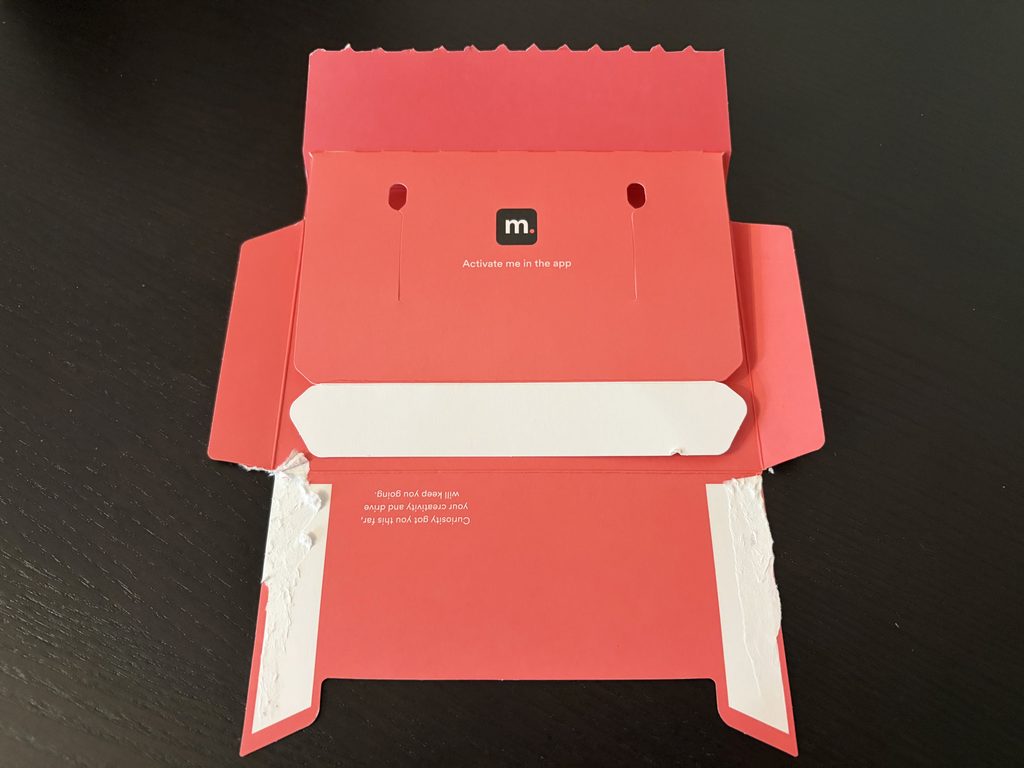
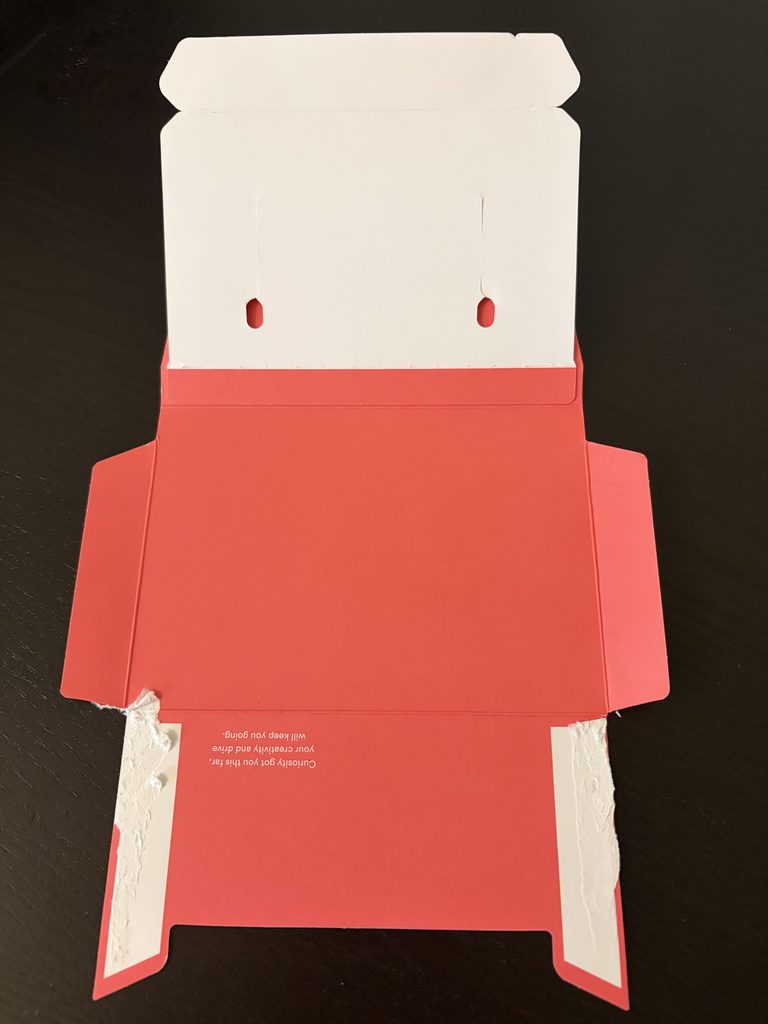
I wanted to understand the relationship between the folds, cuts, attachment points and moving panels.
So I started taking it apart.
Carefully at first, then with a little more determination, separating the glued side sections and unfolding the construction to expose the underlying geometry.
What initially appeared to be a relatively straightforward envelope became a fascinating arrangement of folded board, die-cut openings, retaining sections and connected panels.
The movement wasn’t produced by a spring or an independent mechanical assembly. It came from the geometry of the packaging itself.
The opening flap and internal card carrier had been engineered to work together.
I subsequently discovered that the packaging was produced by Burgopak, a specialist packaging design company whose portfolio includes an impressive range of interactive packaging mechanisms.
Burgopak identifies the Mettle design as part of its Lifter format, in which opening the packaging raises an internal panel to present its contents.
That description makes the mechanism sound simple.
And, from the customer’s perspective, it is.
But simplicity in the finished experience is often the result of considerable thought behind the scenes.
The folds must move predictably. The card needs to remain secure. The materials must withstand handling and postage. The package must be capable of being manufactured, assembled and fulfilled consistently.
And the whole thing must work when somebody opens it without knowing there’s anything special about it.
That’s what makes this an interesting piece of engineering.
The Discovery I Wasn’t Looking For
At this point, I was already convinced the packaging deserved an Engineered by Others observation.
The mechanism was clever, the presentation was thoughtful, and the integration of the physical experience with the brand was particularly well executed.
But I hadn’t finished pulling it apart.
And that’s when I found something I genuinely hadn’t expected.
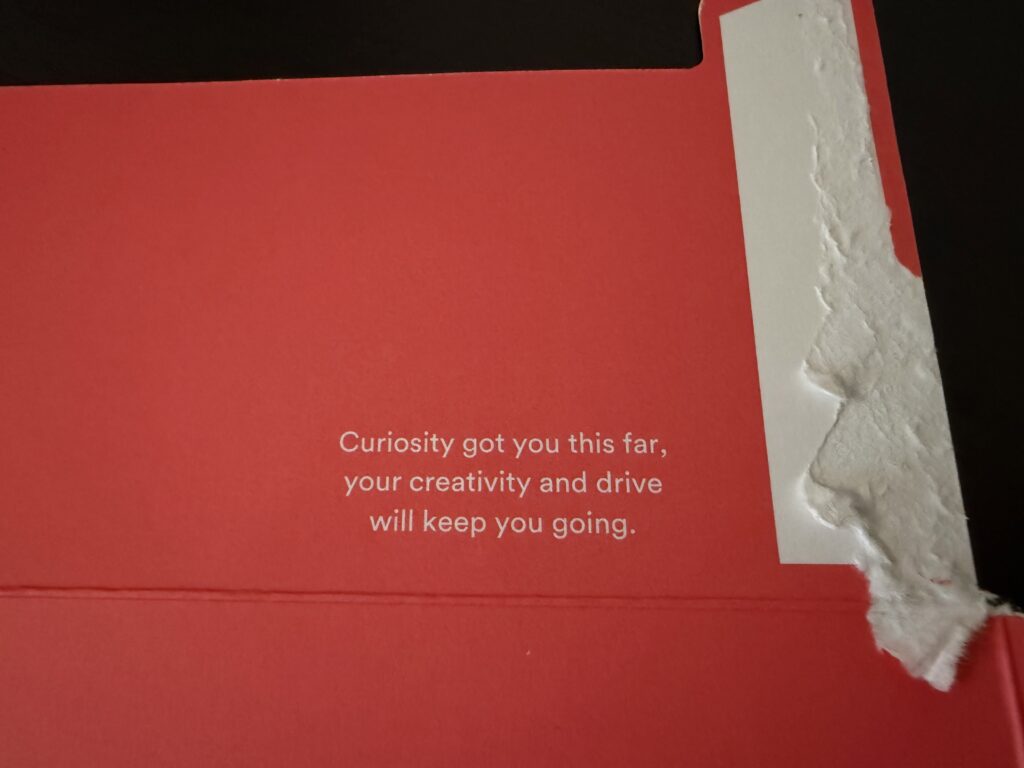
Printed on an internal section of the red board, concealed beneath the glued construction, was a message.
Not a customer instruction.
Not a promotional statement.
Not something most recipients would ever encounter.
An Easter egg.
“Curiosity got you this far, your creativity and drive will keep you going.”
I loved this.
The message wasn’t visible during the normal opening experience. To discover it, I had to go beyond the intended interaction and physically investigate how the packaging had been constructed.
I had been looking for the mechanism.
Instead, I found a message about curiosity.
Whether conceived as a deliberate reward for people who dismantle the packaging, or simply as a hidden expression of the brand’s personality, it was a wonderful discovery.
And it completely changed how I felt about the object.
What had started as an interesting piece of functional packaging had become something more personal.
Somebody had thought to put those words there.
Somebody had made a decision about a part of the packaging that almost nobody would ever see.
And I happened to find it.
The People Behind the Packaging
Discovering the mechanism also introduced me to Burgopak itself.
Looking through its portfolio, I found an extraordinary variety of packaging designs that use movement, folding geometry and controlled reveals to create experiences from relatively simple materials.
Sliding panels, rotating carriers, lifting mechanisms and carefully choreographed openings appear throughout its work.
It’s a fascinating example of how engineering and creativity can operate together.
I also came across articles by Dane Whitehurst, Burgopak’s Creative Director, discussing the importance of physical packaging experiences in an increasingly digital banking environment.
His writing explores how the presentation of a bank card can become an important physical introduction to a brand, rather than simply a means of delivering a functional product.
That thinking is particularly relevant to the Mettle packaging.
For a digital-first bank, the arrival of a physical card may be one of the few tangible interactions a customer has with the organisation.
The packaging therefore has an opportunity to communicate something that an app screen cannot quite reproduce.
Texture. Movement. Anticipation. Discovery.
I’ve attempted to contact Burgopak and Mettle to learn more about the development of this particular design, including the people responsible for the mechanism and the hidden message.
I haven’t yet been able to establish those individual contributions, but I’d be delighted to acknowledge them if that information becomes available.
In the meantime, the packaging itself provides plenty to appreciate.
Beyond the Unboxing
There’s something rather satisfying about an object that continues to reward attention after it has fulfilled its original purpose.
Most recipients will open this envelope, remove their card, activate it and dispose of the packaging.
And that’s entirely reasonable. The packaging has done its job.
But the engineering remains there, whether anyone notices it or not.
The folds still work. The panels still move. The construction still embodies the decisions made by the people who developed it.
And somewhere inside, concealed from almost everybody, is that little message about curiosity and creativity.
The experience has also left me wondering about Burgopak’s other designs.
Having seen the range of mechanisms in its portfolio, I’d love to take apart a few more and understand how they work.
And, naturally, I’m now curious whether any of them contain their own hidden surprises.
Perhaps one day I’ll get to ask somebody at Burgopak.
Until then, this particular piece of packaging has earned its place in Engineered by Others.
Not because it’s the most complicated thing I’ve encountered.
But because it demonstrates how thoughtful engineering can make a simple interaction memorable — and how a little curiosity can reveal considerably more than the designer ever needed the customer to see.
Someone had to think of this.
And we noticed.